
Fibrocystic Changes vs. Fibroadenoma
Fibrocystic Changes
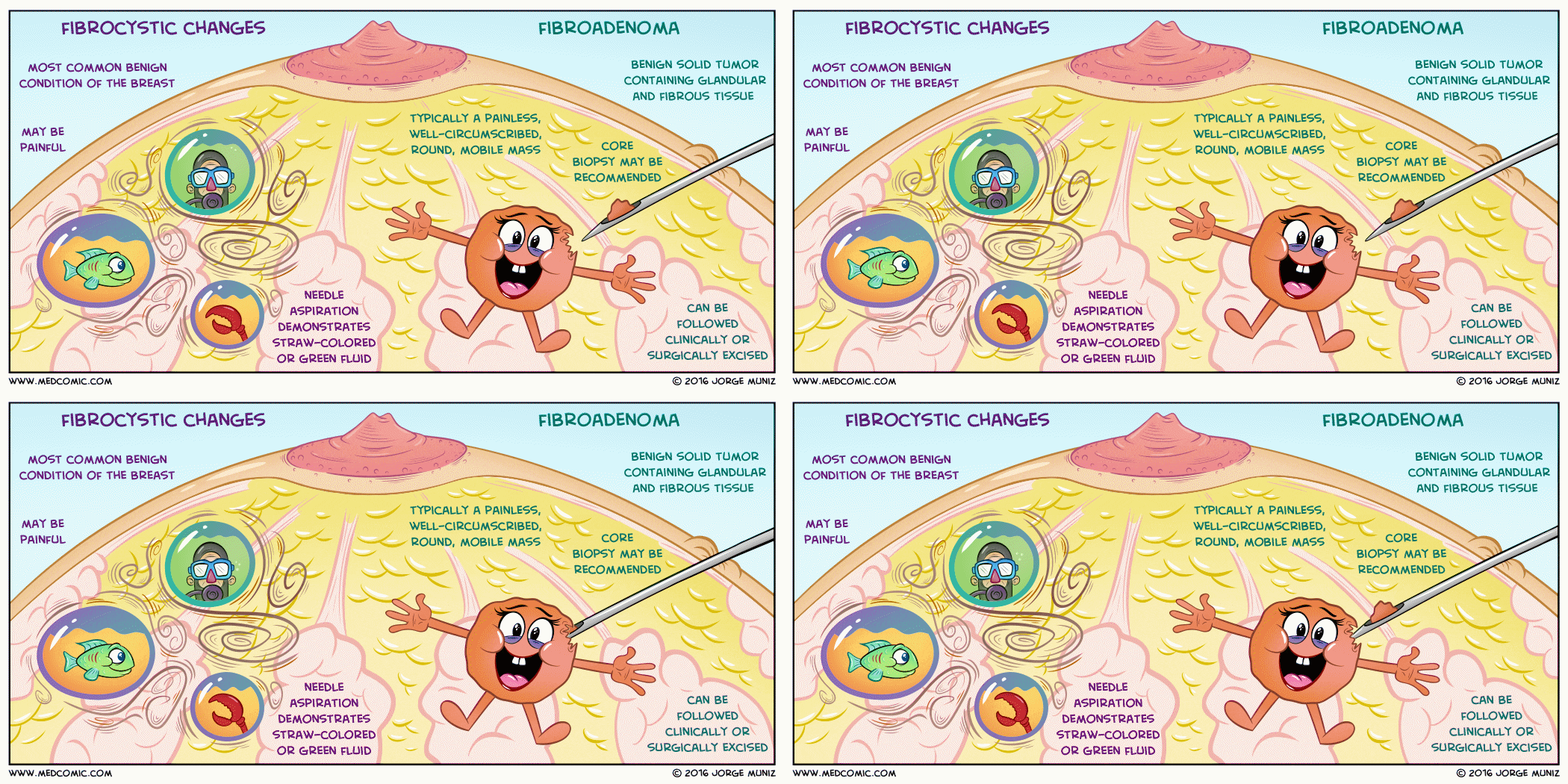
Fibrocystic changes (previously known as fibrocystic disease) is a benign breast condition consisting of fibrous (rubbery) and cystic changes in the breast. It's a catchall term that refers to wide variety of benign histologic changes in the breast epithelium. The condition is common in women 30-50 years of age and may cause breast pain that varies with the menstrual cycle. Typically, ultrasonography is done to differentiate solid from cystic masses. Fine-needle aspiration (FNA) usually demonstrates straw-colored or green fluid.
Fibroadenoma
A fibroadenoma is the most common breast tumor in women younger than 30 years of age. It is a benign neoplasm consisting of glandular and fibrous tissue. It is typically a painless, well-circumscribed, round, mobile mass. No treatment is usually necessary if the diagnosis can be made by core biopsy or cytologic examination. The tumor can be followed clinically or excised if the diagnosis is uncertain.